
Best Hedging Plants for Newcastle — What Grows Thick, Stays Green, and Won’t Take Over
If you’re thinking about putting in a hedge, you’ve probably already realised there are about 400 options and half the internet disagrees on which ones actually work. So let’s cut through it.
Newcastle’s climate, warm summers, mild winters, coastal winds, the odd dry stretch, suits a lot of hedging plants really well. But “suits” and “thrives without turning into a nightmare” are two different things. Some plants look great on the tag at Bunnings and then spend the next decade trying to eat your neighbour’s fence.
Here’s what actually works around Newcastle and the Hunter Valley, what to avoid, and why getting an arborist involved early saves you years of regret.
What Makes a Good Hedging Plant?
Before we get into the specific plants, here’s what you’re actually looking for in a hedge:
- Dense growth habit: it bushes out when you trim it, rather than getting leggy and thin
- Responds well to pruning: you want a plant that thickens up after a cut, not one that sulks
- Evergreen: unless you want a see-through hedge for half the year
- Appropriate size: a plant that naturally tops out close to the height you want, rather than one you’re constantly fighting to keep short
- Suits your soil and aspect: full sun, part shade, sandy coastal soil, heavy clay, it all matters
Getting these basics right is the difference between a hedge that looks good in three years and one that’s still patchy in five.
Plants That Work Well as Hedges in Newcastle
Lilly Pilly (Syzygium species)
The go-to hedging plant in this part of NSW, and for good reason. Lilly pillies are evergreen, dense, fast-growing, and they respond brilliantly to regular trimming, every cut encourages more branching, which is exactly what you want in a hedge.
There are a few varieties worth knowing about:
- Syzygium ‘Resilience’: bred specifically for psyllid resistance (those annoying bumpy leaves you see on older lilly pillies). Grows to about 3-4 metres if left alone, but hedges beautifully at 1.5-2.5 metres. Compact, dense, and handles Newcastle’s humidity without drama.
- Syzygium ‘Sublime’: tighter, more columnar growth. Good for narrower spaces where you don’t want the hedge taking up half the footpath.
- Syzygium ‘Tiny Trev’: tops out around a metre. Good for low border hedges or garden edging.
Heads up: If you go with an older variety that’s not psyllid-resistant, you’ll spend a lot of time dealing with pimply leaves. It’s worth paying a bit more for the resistant cultivars.
Murraya (Murraya paniculata)
Murraya is one of the most popular hedging plants in Australia and it earns that spot honestly. Dense, evergreen, fast-growing, and the small white flowers smell incredible. It clips into a tight formal shape easily and handles Newcastle’s conditions well, tolerates heat, handles coastal exposure, and isn’t too fussy about soil as long as it drains.
One thing to know: Murraya can get scale insects. A healthy, well-maintained hedge shrugs it off, but a neglected one can get ratty. Regular trimming and the occasional feed keeps it solid.
Photinia (Photinia x fraseri ‘Red Robin’)
You’ve seen these around, they’re the ones with the bright red new growth that stands out against the older dark green leaves. Photinia makes a strong privacy screen, grows quickly, and clips well.
It does best in full sun and handles Newcastle’s clay soils without complaint. Most people keep it around 2-2.5 metres as a boundary hedge.
Watch for: Photinia can be prone to leaf spot in humid conditions. Keeping good airflow through the hedge, proper pruning technique, not just hacking the outside, goes a long way.
Viburnum (Viburnum odoratissimum ‘Dense Fence’)
If you want a thick, fast screen, ‘Dense Fence’ does exactly what the name suggests. It’s vigorous, fills in quickly, and the foliage is dense enough that you genuinely can’t see through it once it’s established.
Works well in full sun to part shade. Handles Newcastle’s humidity. Stays green year-round.
The trade-off: It grows fast, which means it also needs trimming more often. If you’re not keeping up with maintenance, it’ll start getting wide and woody at the base. It needs regular shaping to keep it looking neat rather than just big.
Westringia (Westringia fruticosa)
If you want something lower-maintenance and a bit more relaxed-looking, Westringia is a solid pick. It’s native, handles coastal conditions well, tolerates salt spray, and doesn’t need as much water once established.
It gives you a softer, more informal hedge shape, think coastal cottage rather than crisp formal lines. Grows to around 1-1.5 metres depending on the variety, and handles trimming well without losing its natural shape.
Good for: Front yards, coastal properties, spots where you want a hedge that doesn’t look like it was cut with a set square.
Callistemon (Callistemon species, Bottlebrush)
A lot of people don’t think of bottlebrush as a hedging plant, but certain varieties, like ‘Green John’ and some of the dwarf forms, hedge up really well. They’re tough, drought-tolerant once established, and attract birds. The flowers are a bonus.
They handle Newcastle’s coastal conditions without issue. Just make sure you pick a variety that suits the height you’re after, full-size callistemons can hit 4-5 metres and that’s a lot of hedge to manage.
What to Avoid (or At Least Think Twice About)
Not every popular hedging plant is a great idea for Newcastle.
- Privet (Ligustrum), It hedges well, but it’s an environmental weed in NSW. The berries get spread by birds, and privet is one of the worst invasive species in the Hunter Valley. Some councils will fine you for planting it. Don’t.
- African Olive (Olea europaea subsp. cuspidata), another invasive species that creates massive problems in bushland areas around Newcastle. Hard pass.
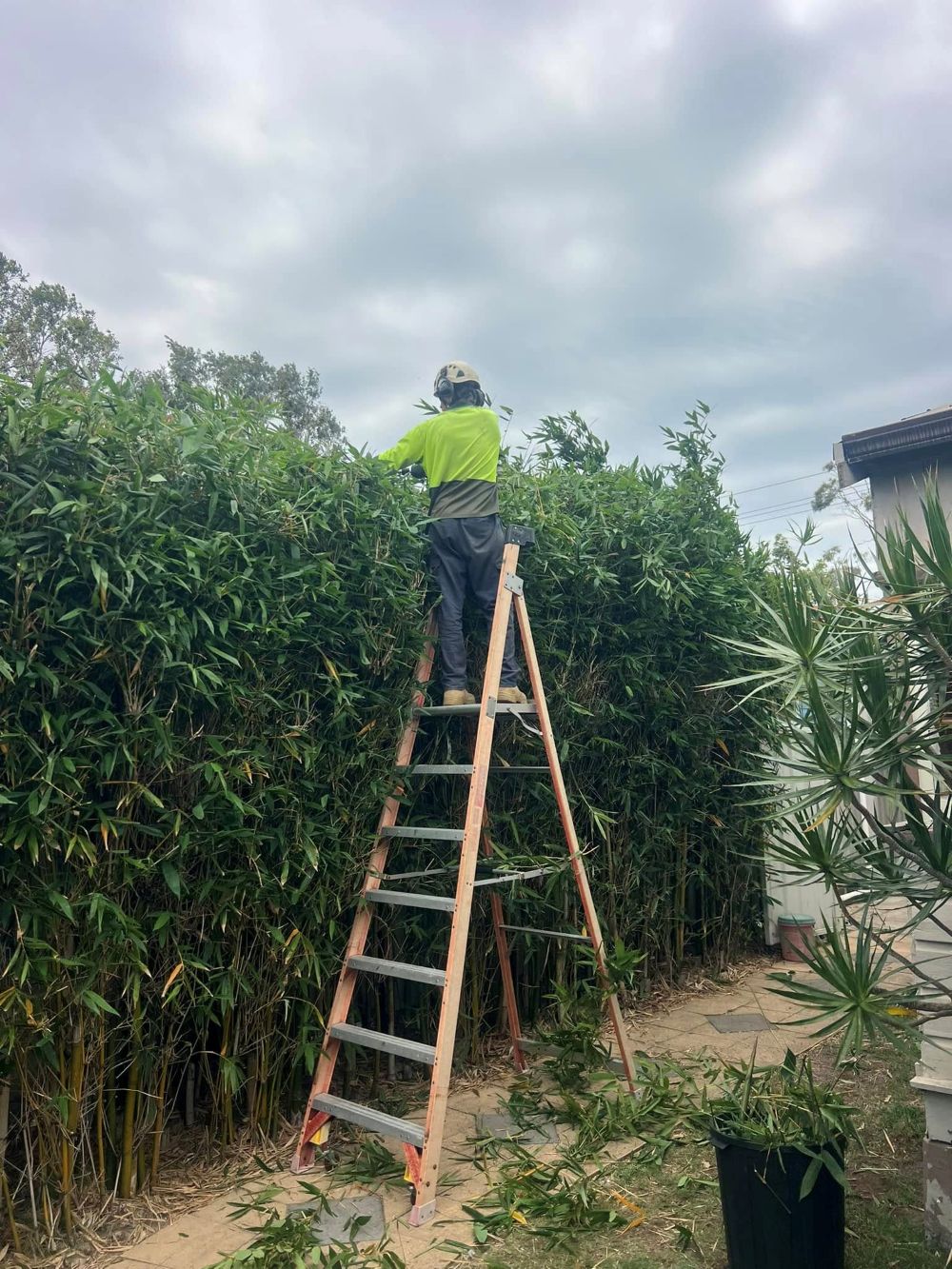
- Bamboo (running varieties), this isn’t so much a hedge as it is a declaration of war on your neighbours. Running bamboo spreads underground and will come up in places you never planted it. If you want bamboo, only use clumping varieties, and even then, think carefully about placement.
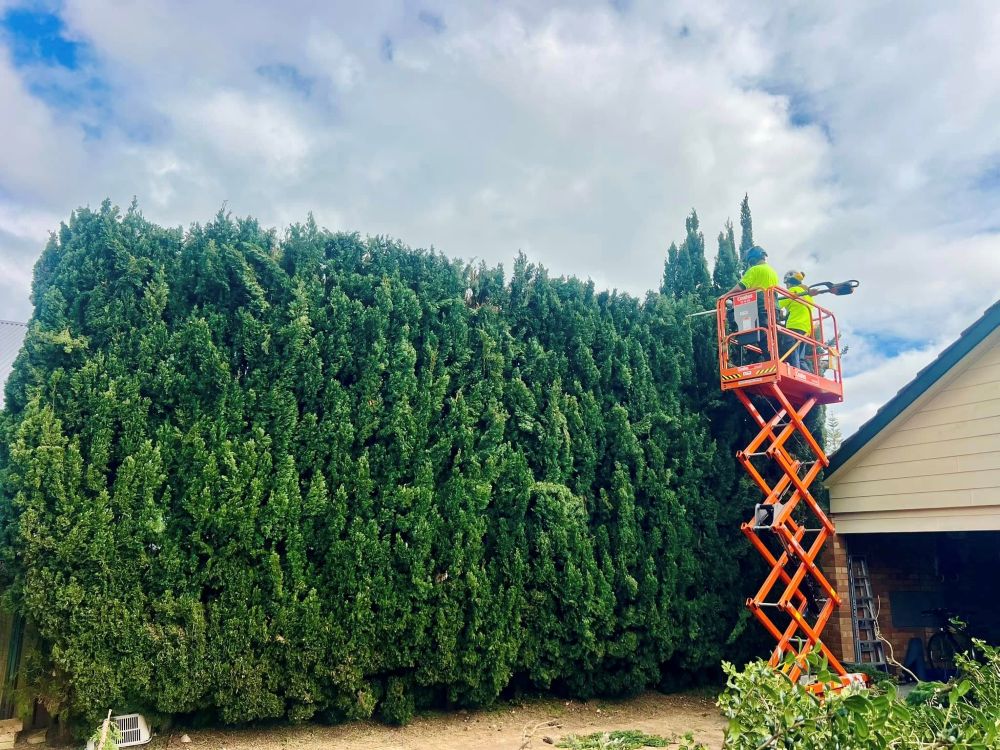
- Leyland Cypress: popular in cooler climates, but in Newcastle’s humidity they can struggle with fungal issues. They also get very large very fast and become expensive to maintain at a reasonable height.
Why Hedge Selection Actually Matters
Here’s where most people go wrong: they pick a plant based on what it looks like in a 200mm pot at the nursery, without thinking about what it’s going to do over the next 10 years.
A hedge is a long-term commitment. If you plant something that naturally grows to 5 metres and you want a 1.5-metre hedge, you’re signing up for constant trimming and a plant that’s always fighting you.
And spacing matters more than people realise. Plant too close and the roots compete and the hedge gets thin at the base. Plant too far apart and it takes years to fill in. Getting the right plant in the right spot at the right spacing is the difference between a hedge that looks after itself and one that’s a permanent headache.
Where an Arborist Fits Into Hedging
Most people think of arborists as the crew you call when a tree needs to come down. That’s part of it, but arborists also know plants, which species suit which conditions, how they grow, how they respond to pruning, and what’s going to cause problems down the line.
For hedging, that means:
- Picking the right plant for your specific property: not just “what grows in Newcastle” but what suits your soil, aspect, wind exposure, and the height you actually want
- Getting the spacing and planting right: so the hedge fills in properly without overcrowding
- Formative pruning in the first year or two: training the hedge to be dense from the bottom up, not just bushy on top with bare legs underneath
- Ongoing maintenance: keeping the shape right, spotting disease or pest damage early before it takes hold
A hedge that gets proper formative pruning early will outperform a neglected one for the rest of its life.
Frequently Asked Questions
Do I need an arborist just to plant a hedge?
You don’t need one, you can absolutely plant a hedge yourself. But if you want to get the species, spacing, and soil prep right the first time, having someone who does this every day take a look at your property saves a lot of trial and error. It’s the difference between guessing and knowing.
How much does hedge planting and maintenance cost?
It depends on the length of the hedge, the species, the access, and how established you want the plants to be when they go in. Larger plants cost more upfront but give you a usable hedge sooner. For a proper quote, give Waratah a call, they’ll give you a straight answer based on your actual property.
How often should hedges be trimmed?
Most hedging plants in Newcastle need trimming two to four times a year. Fast growers like Murraya and Viburnum need more frequent attention. Slower growers like Westringia can get away with less. Little and often beats one massive hack once a year.
When is the best time to plant a hedge in Newcastle?
Autumn is ideal. The soil is still warm enough for roots to establish, but you’re heading into cooler weather so the plants aren’t stressed by heat while they’re settling in. Late winter and early spring work too. Avoid planting in the middle of summer, new plants struggle with the heat and you’ll be watering constantly.
Can I plant a hedge on the boundary line?
This gets into council regulations and dividing fences legislation. Generally, if it’s on your property, it’s your hedge. But if it overhangs the neighbour’s side, they can trim back to the boundary. Worth having a chat with your neighbour before you plant, and checking with Newcastle City Council about height restrictions.
What’s the fastest-growing hedge for privacy?
Viburnum ‘Dense Fence’ and Murraya are among the fastest to fill in. But fast growth also means more maintenance, they don’t stop growing just because they’ve hit the height you want. If you want fast coverage with less ongoing trimming, Lilly Pilly ‘Resilience’ is a good middle ground, it’s reasonably quick to establish but not as aggressive as Viburnum.
Get Your Hedge Started Right
If you’re thinking about putting in a hedge, or you’ve got an existing one that’s gotten away from you, Waratah Tree Care can help you sort it out. From picking the right plants for your property to getting them in the ground properly and keeping them maintained, it’s what we do.
Give us a call and we’ll come have a look at what you’re working with.
Our Services
Get In Touch
Contact us today for a free, no-obligation quote on our professional tree care services.