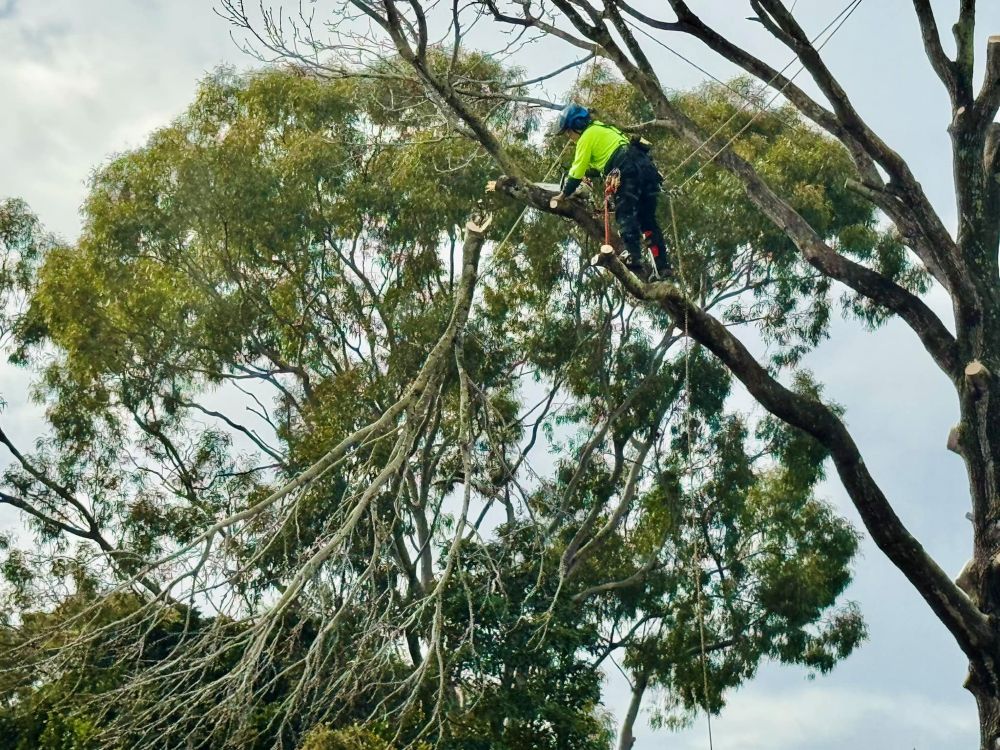
Lopping is the indiscriminate cutting of large branches, usually to reduce a tree’s size in a hurry, with little regard for where the cut lands. Topping is the same idea applied to the leader, where the top is taken out to knock the height down. Both are fast. Both look decisive on the day. The trouble starts afterwards.
A tree does not heal a wound the way skin heals. It walls the damage off, growing new tissue around and over the injury while the damaged wood stays inside it. A clean cut in the right place gives the tree a small, manageable job. A blunt cut through the middle of a large limb gives it an enormous one, and the tree often loses that race. Decay fungi and wood boring insects get in through the open wound, and the rot travels down inside the limb where nobody can see it.
Then there is the regrowth. A tree that loses a large share of its canopy at once pushes out masses of epicormic shoots: fast, bushy, upright growth straight from dormant buds under the bark. People read that as the tree bouncing back. It is closer to a panic response. Those shoots are only shallowly attached to the outside of the old wood, they grow quickly, they get heavy, and they sit directly above a wound that is rotting. That combination is why a tree cut this way can drop limbs years later in the first serious blow. The short version is that lopping often leaves a more dangerous tree than the one you started with, and the original problem returns within a couple of seasons.
Why Crowning Could Kill Your Tree
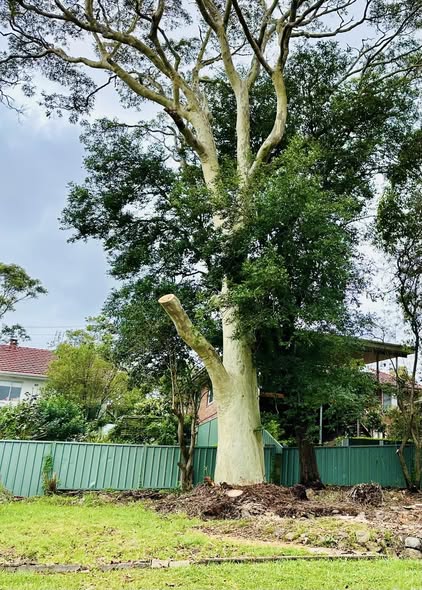
Crowning is the slipperiest of the four words, because it is not a defined operation. People use it to mean anything from taking the top out of a tree, to lifting the lower branches, to cutting the whole canopy back hard. Two people can agree to have a tree crowned and picture completely different jobs, which is exactly how a tree ends up hat racked by somebody who thought that was what was ordered.
Done that way, it is not a cosmetic problem. It could kill the tree, and the mechanism is not mysterious. Three things happen at once. The cuts are large and land mid limb, so the wounds are too big for the tree to close and decay moves in through every one of them. The canopy is the tree’s food factory, so removing most of the leaf area at once takes away its ability to feed itself and to fund the repairs it now has to make. And the regrowth that follows is weakly attached to the outside of decaying wood, so the structure that comes back is worse than the one that was removed. A vigorous tree in good condition may push through all of that. A eucalypt already carrying drought stress may not. That is why the honest word is could rather than will.
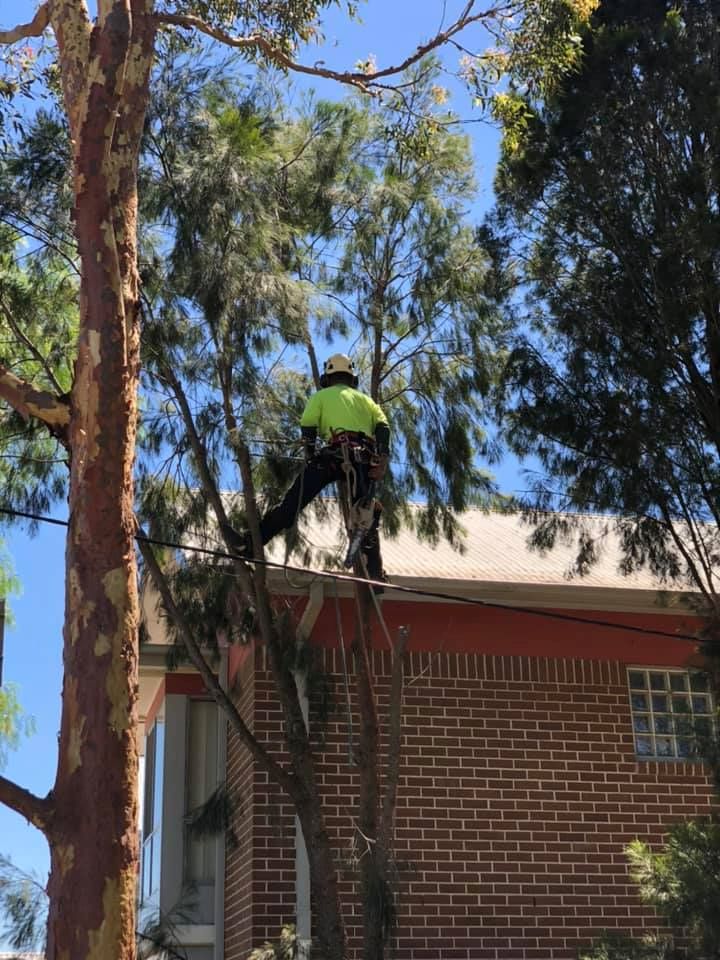
The crown operations AS 4373-2007 actually covers are crown lifting, reduction pruning and crown thinning. Each has a specific meaning:
- Crown lifting: the lower branches are removed to create clearance underneath, for a footpath, a driveway, a vehicle or a roofline. The top of the tree is left alone.
- Reduction pruning: the outer branches are shortened back to a suitable lateral branch, one big enough to take over as the new growing tip. The tree keeps its natural shape, just smaller. This is the legitimate answer to a tree that has outgrown its spot, and it is the one hard cutting pretends to be.
- Crown thinning: covered in its own right below, because it gets confused with reduction constantly.
So when somebody offers to crown your tree, the useful question is which of those three they mean, and whether the cuts will finish on a lateral branch or in the middle of nowhere.
What Crown Thinning Is and When a Newcastle Tree Needs It
Thinning is the one most people have never had explained, and it is genuinely different from everything above. Crown thinning is the selective removal of a portion of the smaller secondary branches, spread evenly through the canopy, to reduce how dense it is. What it does not do is change the tree’s height or its outline. A properly thinned tree is the same size and the same shape it was that morning. There is simply less foliage packed inside it.
The point is wind and light. A dense canopy behaves like a sail in a storm, and on this coast that matters. Opening it up lets air move through the tree instead of pushing against it, which takes load off the limbs and off the root plate. It also lets light down to whatever is growing underneath, and better air movement through the canopy helps with some fungal problems.
Thinning goes wrong when it is overdone. Strip too much out and you get what the trade calls lion tailing: bare inner branches with a tuft of foliage on the end of each one. That shifts all the weight to the tips, which is the opposite of what you were trying to achieve. Thinning is a light touch spread evenly through the tree, not a clean out of the middle.
What Tree Pruning Means and Where the Cut Goes
Pruning is the umbrella term, and what makes it pruning rather than cutting is that every branch comes off for a stated reason and every cut lands in a specific place.
That place is the branch collar: the slightly swollen ring of tissue where a branch meets the trunk or a larger limb. The collar holds the tissue the tree uses to wall off and close the wound. Cut just outside it and the tree seals the cut efficiently. Cut flush to the trunk and you remove the collar itself, so the tree has nothing to work with and the wound stays open. Leave a long stub and there is no living tissue at the cut end to close it, so the stub dies back and decay walks straight in. Same branch, same tree, three completely different outcomes depending on where the saw went.
The recognised types of tree pruning each have a job:
- Deadwooding: dead, dying or broken branches are taken out. It is the lowest risk work on any tree and often the most useful, because dead limbs are what fall.
- Formative pruning: a young tree is shaped early so it grows one strong central leader instead of competing stems that will fail against each other at twenty years old. Ten minutes of work now saves a removal later.
- Structural pruning: the same idea applied to a semi mature tree, correcting weak forks and crossing limbs before they become the failure point.
- Selective pruning: individual branches removed for a defined purpose, such as weight sitting over a roof, or clearance from a structure.
- Remedial or restorative pruning: rehabilitating a tree that has already been damaged, including one that was cut badly in the past. A tree carrying a crowd of weak regrowth can often be brought back over several years by thinning that regrowth out and letting a few well placed shoots develop into proper limbs.
Why Newcastle Trees Take Lopping Badly
Newcastle’s canopy leans heavily on species that respond poorly to blunt cutting, and each one fails in its own way.
Spotted gums and eucalypts are everywhere in Newcastle yards and streets, and they already carry stress from hot summers, dry spells and coastal storms. Adding acute injury on top of chronic stress is what produces a eucalypt that sheds limbs without much warning. Our case study on a lightning struck spotted gum in Adamstown Heights is a good example of a tree that needed careful assessment rather than a fast size reduction.
Brush box dominates the older suburbs and can reach twenty metres or more in a suburban backyard, so the temptation to take the top out is strong. What you get instead is several weakly attached regrowth leaders competing for dominance above a decay column running down from the old cut. Angophoras, the Sydney red gums common around Merewether, The Junction and Bar Beach, are structurally complex trees with a naturally irregular form, and major work on them needs a real understanding of how the tree carries load. Camphor laurel is the odd one out: hard cutting makes it more vigorous rather than less, so cutting it back hard works against you.
For the fuller picture of which species cause the most grief locally, we wrote about the six trees Newcastle arborists remove most often.
Lopping, Crowning, Thinning and Pruning Side by Side
| Term | What it is | Effect on the tree |
| Lopping | Large branches cut back indiscriminately to reduce size fast | Open wounds, internal decay, weakly attached epicormic regrowth |
| Topping | The top taken out of the tree to reduce height | As above, plus the loss of the tree’s natural form |
| Crowning | Not a defined operation, means different things to different people | Depends entirely on which cuts actually get made |
| Crown lifting | Lower branches removed for clearance underneath | Minor, when the cuts land at the branch collar |
| Reduction pruning | Outer branches shortened back to a suitable lateral | Natural shape kept, smaller tree, cuts the tree can seal |
| Crown thinning | A portion of secondary branches removed evenly through the canopy | Less wind load, more light, same size and shape |
| Pruning generally | Selective removal for a stated reason, cut at the branch collar | Tree seals the wound and keeps growing |
Lopper or Arborist: Which One Your Tree Job Actually Needs
For a garden clean up, somebody with a chainsaw, a trailer and a good work ethic is genuinely fine. Cutting back an overgrown shrub, tidying a hedge, clearing a pile of green waste after a windy weekend: that work does not need an arboriculture qualification. Plenty of people do it well and charge fairly for it.
The line moves when two things enter the picture. The first is the health of the tree, when you want it to still be there and still be sound in ten years. The second is what is standing near it: a fence, a shed, a garage, a house, a neighbour’s roof. That is where a qualified arborist earns the difference, because the job stops being about cutting and starts being about controlling where several hundred kilograms of timber goes.
Three practical things are worth knowing before you book, and none of them are accusations. They are just the gaps that catch people out.
- The title carries no qualification requirement: anyone can print a word on a van, so the word itself tells you very little. The trade level arboriculture qualification on the national training register is AHC30820 Certificate III in Arboriculture, which covers climbing, elevated work platform work and tree dismantling. That is a thing you can ask about and get a straight answer to.
- Insurance is something you verify rather than assume: public liability cover is not guaranteed by the word on the van, and a tree over a building is exactly where the consequences of something going wrong are largest. Ask for proof before work starts, not after. Waratah is fully insured and the crew are qualified arborists, and the same question is fair to put to anybody quoting on your tree.
- The stump is part of the job, or it is not: whoever takes the tree down may not carry a grinder, and if they do not, the stump stays in your lawn and you are arranging a second trade to finish what you thought was one job. It is worth settling at the quote. Stump grinding is part of what Waratah does, so the job finishes in one visit.
Three Questions to Ask Before Anyone Prunes or Removes Your Tree
If you take nothing else from this, take these three.
- What arboriculture qualification do you hold?: a good answer names an actual qualification, such as AHC30820 Certificate III in Arboriculture, and the person answering does not get prickly about being asked. A good answer also names the pruning type being quoted: crown lifting, reduction pruning, crown thinning or deadwooding. A vague answer about tidying it up or taking a bit off the top tells you something too.
- Can I see proof of public liability insurance before work starts?: the document to ask for is a certificate of currency, and the time to ask is before anyone climbs the tree. A business that carries cover will have it to hand and will send it without any fuss.
- Do you grind the stump, or am I left with it?: a good answer is a plain yes or no, quoted up front, so you know whether you are booking one job or two.
If the tree in question is a neighbour’s, or its branches cross the fence, sort out who can authorise the work before anyone starts. Our guide on neighbour tree disputes in NSW covers that ground. It is also worth checking whether your council protects the tree, because that protection applies regardless of what the work is called.
When Tree Removal Is the Right Answer Instead of Pruning
Pruning is not always the answer, and pretending otherwise helps nobody. Sometimes a tree is too far gone, too compromised, or simply in the wrong place. A qualified arborist should tell you plainly which situation you are in. Signs that tree removal makes more sense than pruning include a large share of the canopy being dead or diseased, significant internal decay or hollowing in the trunk, a lean that has worsened recently, and root damage that has compromised stability. Storm damage is its own category, and dangerous or storm damaged trees need assessing before anything else happens.
The honest position is that the right cut depends on the tree: its species, its condition, and what is standing near it. That is what an onsite assessment is for. Somebody looks at the actual tree and tells you which of these four words applies to it.
Frequently Asked Questions About Lopping, Crowning, Thinning and Pruning
What is the difference between tree lopping and tree pruning?
Lopping is cutting large branches back indiscriminately to reduce a tree’s size quickly, with little regard for where the cut falls. Pruning is the selective removal of specific branches for a stated reason, with each cut made just outside the branch collar so the tree can seal the wound. Same saw, completely different outcome for the tree.
Is tree lopping bad for trees?
Usually, yes. Large blunt cuts leave wounds a tree cannot seal properly, so decay fungi and wood boring insects get in and the rot spreads down inside the limb. The tree responds with masses of epicormic shoots that are weakly attached, grow fast and get heavy. A tree cut this way can become more likely to drop limbs in a storm, not less.
Can crowning kill a tree?
It can, though it depends on the tree and how hard it was cut. Removing most of the canopy at once takes away the leaf area the tree uses to feed itself, the large cuts left behind are usually too big to close so decay gets in, and the regrowth that follows is weakly attached to decaying wood. A vigorous, healthy tree may push through it. One already stressed by drought or poor soil may not.
What does crowning a tree mean?
Crowning is not a defined pruning type, which is exactly why it causes confusion. People use it to mean taking the top out, lifting the lower branches, or cutting the whole canopy back hard. The defined crown operations are crown lifting, reduction pruning and crown thinning, so it is worth asking which of those is being quoted.
What is crown thinning and when does a tree need it?
Crown thinning is the even removal of a portion of the smaller secondary branches through the canopy, to reduce density without changing the tree’s height or shape. It reduces wind load, which matters on the coast, and lets more light and air through the canopy. Overdone, it leaves bare inner branches with foliage only on the tips, which makes the tree worse rather than better.
Do I need an arborist, or is a lopper fine?
For a garden clean up, a hedge tidy or clearing green waste, somebody with a chainsaw and a trailer is genuinely fine. You want a qualified arborist when the health of the tree matters, or when there are structures close by such as fences, sheds, garages or a house, because that is where control of the falling timber and proof of insurance both start to count.
Is there an Australian standard for tree pruning?
Yes. AS 4373-2007, Pruning of Amenity Trees, was published in March 2007 and is still current. It covers removal of deadwood, crown lifting, formative pruning, reduction pruning including line clearance, selective pruning, crown thinning, and remedial or restorative pruning. Lopping and topping are not practices it covers.
Can a tree recover after it has been lopped?
Often it can, though it takes years rather than weeks. The approach is restorative pruning: thinning out the crowd of weak regrowth over several visits, letting a few well placed shoots develop into proper limbs, and keeping an eye on the decay in the old wounds. Some trees are too far gone for that, which is a judgement call made at the tree.
Steven Brown is a qualified arborist and co owner of Waratah Professional Tree Care, a family owned business working on trees across Newcastle and the Hunter since 1998. For a pruning assessment or a free quote, call (02) 4956 6602 or get in touch online.
Our Services
Get In Touch
Contact us today for a free, no-obligation quote on our professional tree care services.