
How to Tell if a Tree Is Sick or Dying: The Signs Waratah Professional Tree Care Arborists Look For in Newcastle
A tree rarely dies overnight. The trouble is that some signs of a sick tree look a lot like normal seasonal change, and some normal changes look alarming on a perfectly healthy tree. This guide explains how to tell if a tree is sick or dying, which signs our arborists look for when we visit a property in Newcastle or the Hunter, and when it makes sense to book an onsite tree health assessment.
Waratah Professional Tree Care has been looking after trees across Newcastle, Lake Macquarie, Maitland and the Hunter since 1998. If a tree on your property has started to look different from how it used to, that change is worth following up.
How Can You Tell if a Tree Is Sick or Dying?
A sick tree usually tells you something is wrong through its canopy first, then its trunk and bark, and finally its roots and the ground around it. One sign on its own is often nothing to worry about. Several signs together, or one sign that keeps getting worse, is when a tree needs a closer look from a qualified arborist.
These are the signs our arborists look for when they assess a tree:
- Thinning leaves or bare patches in the canopy
- Branches dying back from the tips
- Leaves wilting, browning or dropping out of season
- Cracks or splits in the trunk or major branches
- Fungal growth such as mushrooms or brackets at the base or on the trunk
- Hollows, soft wood or sawdust around holes in the bark
- A tree that has started to lean or has lifting soil around the roots
Signs of a Sick Tree in the Leaves and Canopy
The canopy is where most people first notice a problem. When a tree is stressed, it often reduces the number of leaves it carries, so the canopy looks thinner and you can see more sky through it than you could a year or two ago. Comparing an old photo of the tree with how it looks today is one of the easiest ways to spot a slow decline.
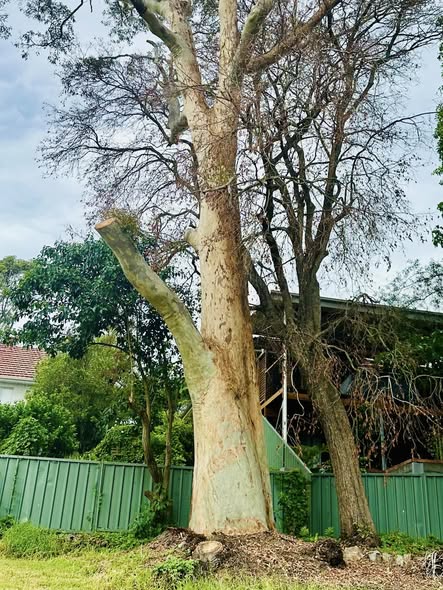
Dieback is another common sign. Dieback means the outer twigs and branches die first and the dead section slowly moves back towards the trunk. On a eucalypt you may see bare, grey branch tips poking out above the green leaves. Sudden dieback in the weeks after a storm can point to lightning damage, which was the case with a Spotted Gum we assessed in Adamstown Heights.
Leaves that wilt, yellow or turn brown out of season are also worth noting. Before you worry, consider what kind of tree you have. Deciduous trees lose their leaves every autumn and winter, and a bare tree in July is usually a healthy one. A tree that drops its leaves in spring or summer is a different matter.
What the Trunk and Bark Tell You About a Dying Tree
The trunk carries water up to the leaves and sugars down to the roots through a thin layer of living tissue just under the bark, called the cambium. When that layer is damaged, the tree loses its ability to feed itself, and the parts above the damage start to decline. That is why damage to the trunk is often more serious than it first looks.
Cracks and splits in the trunk or in large branches are a structural warning sign. A crack can let water and fungi into the wood, and it can also mean the branch or trunk is already under strain. Large cracks, especially where two main stems join, should be checked by an arborist rather than left to see what happens.
Bark is where many Newcastle homeowners get a false alarm. Many of our native gums shed their bark naturally in strips or patches every year, and the fresh bark underneath is often a bright, clean colour. That is normal growth. What we look for instead is bark that has come away to reveal dry, dead wood, bark that is cracked and sunken, or bark that has been scorched or blown off in a strip down the trunk.
Fungus, Hollows and Pests on a Sick Tree
Fungal growth at the base of a tree or on the trunk is one of the signs we take most seriously. Mushrooms or hard, shelf-like brackets growing from the wood are often a sign of decay inside the tree. By the time a fungus is visible on the outside, the decay inside may already be well advanced, and a tree can look healthy in the canopy while its trunk or roots are weakening.
Hollows can be part of an old tree’s life and do not always mean the tree is unsafe. The size of the hollow, where it sits and how much sound wood is left around it all matter. A hollow at the base of a large tree near a house needs a different answer from a small hollow high in a branch.
Pests and diseases often move in when a tree is already stressed. Wounds from storms, lightning or poor pruning give fungal disease and wood-boring insects a way in. Fine sawdust around small holes in the bark, weeping sap or mud tracks running up the trunk are signs that insects are active in the wood. Identifying pests and diseases in a tree is part of what our arborists check on a tree health assessment.
Root and Ground Signs That a Tree Is in Trouble
Roots are hard to see, so most root problems show up as changes in the ground or in the way the tree stands. A tree that has started to lean, when it used to stand straight, is a warning sign. So is soil that has cracked, lifted or mounded on one side of the trunk, because it can mean the roots on the other side are no longer holding.
Changes around a tree can also start a decline. Trenching for pipes or cables, a new driveway, building work, or extra soil piled over the root zone can all damage roots that the tree relies on. The effect often shows up in the canopy a year or more later, which is why people do not always connect the two. If a tree started to go downhill after building work nearby, mention that when you call us.
Is My Tree Dead, Dying or Just Dormant?
A dead tree and a dormant tree can look similar in winter, especially a deciduous tree with no leaves. The difference shows in spring. A dormant tree puts out new buds and leaves when the weather warms up, while a dead tree stays bare. If most of a tree fails to leaf up in spring and summer, it is likely to be dead or dying.
Some trees respond to stress by sending out lots of small new shoots along the trunk and main branches. This new growth can look like a good sign, but it often means the tree is struggling and trying to replace lost leaves. In the Spotted Gum case study, the regrowth told us the tree was fighting back, and the amount of regrowth over the following months would show whether it could recover or would need to be removed.
A dead tree is not a stable tree. As the wood dries out and decays, limbs become brittle and can fall without warning, even on a calm day. If you are sure a tree is dead, plan for its removal rather than waiting for it to come down by itself. Our tree removal service in Newcastle covers dead, dying and hazardous trees for homeowners, strata properties and businesses.
When Is a Sick Tree Dangerous?
A sick tree becomes a safety concern when the problem affects its structure, or when the tree is close to something it could hit. A thin canopy on a tree in the middle of a paddock is a health question. The same canopy on a tree leaning over your roof, driveway or the neighbour’s fence is a safety question as well.
These signs suggest a tree may need urgent attention:
- A tree that has suddenly started to lean
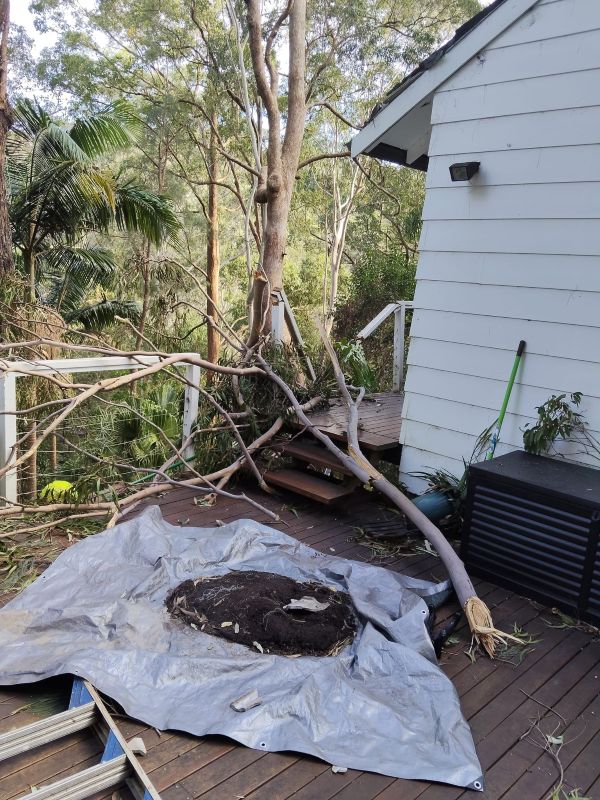
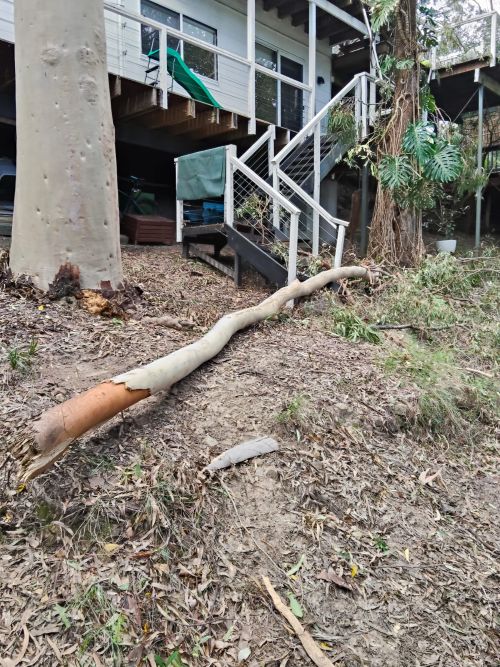
- Large limbs that are split, hanging or have already fallen
- Deep cracks in the trunk or where main stems join
- Roots lifting or soil heaving at the base
- Decay, hollows or fungal growth near the base of a large tree
- Damage from lightning, strong wind or flooding
If you notice any of these, keep people and pets away from the tree until it has been checked. Our page on dangerous and storm-damaged trees explains how we handle hazardous trees and storm damage across Newcastle.
Can a Sick Tree Be Saved?
Many sick trees can be saved, especially when the problem is found early. The answer depends on the cause, the species, how much of the tree is affected, and how healthy the tree was before the problem started. A tree with some dieback from a dry season may recover well with the right care, while a tree with advanced decay in the trunk may not.
When a tree can be kept, the usual options are tree pruning to remove dead, diseased or weakened branches, treatment of the problem we have found, or monitoring the tree over time to see how it responds. When removal is the safer choice, we will explain why and talk you through what removal involves. If you are wondering whether you need permission to remove the tree, our guide on council approval to remove a tree in Newcastle is a good place to start.
Booking an Onsite Tree Health Assessment in Newcastle
Some people search for a tree doctor when a tree looks unwell. The person you want is a qualified arborist, someone trained in tree biology, structure and disease. For most straightforward tree work, our free online quote form works well, and you can send a photo of the tree with it. When you are not sure whether a tree is sick, unsafe or simply going through a normal seasonal change, an arborist needs to see it in person.
During an onsite tree consultation, our arborist visits your property, assesses your trees and walks you through the findings on the day. The assessment covers:
- The condition and health of each tree
- Risk factors such as structural weakness, disease, root issues or closeness to buildings
- Your options, whether that is removal, pruning, treatment or monitoring
- Our recommendation on the best course of action
The consultation fee is separate from any tree work, and there is no obligation to go ahead. We confirm the fee when you book. If you decide to proceed with pruning or removal after the visit, we will give you a full quote at that time.
An onsite tree health assessment is the better choice when a tree looks unwell or unstable, has been damaged in a storm, is large or close to your home, or when you are not sure whether it needs to come down or can be saved.
Frequently Asked Questions About Sick and Dying Trees
How do I know if my tree is dying?
The most common signs of a dying tree are a thinning canopy, branches dying back from the tips, leaves dropping out of season, fungal growth on the trunk or base, and cracks or dead wood showing under the bark. One sign alone is not always serious, but several together mean the tree should be checked by an arborist.
Is it normal for gum trees to lose their bark?
Yes. Many eucalypts shed their bark naturally in strips or patches, and the new bark underneath is often clean and brightly coloured. Shedding bark is a concern only when it exposes dry, dead wood, when the bark is cracked and sunken, or when a strip has been scorched or blown off, which can be a sign of lightning damage.
What does a tree health assessment involve?
Our arborist visits your property and looks at the condition and health of each tree, including the canopy, trunk, bark, roots and the ground around it. We check for disease, pests, structural weakness and risks to buildings, then explain your options on the day, whether that is pruning, treatment, monitoring or removal.
Should I remove a dead tree straight away?
A dead tree should be removed before it starts to drop limbs. Dead wood becomes brittle as it dries and decays, and branches can fall without warning. If the tree is near your house, a fence, a driveway or an area where people walk, plan its removal soon and keep people away from it in the meantime.
Which areas do you cover for tree health assessments?
We visit properties across Newcastle, Lake Macquarie, Maitland, Port Stephens and the wider Hunter region. When you call, let us know where the property is and how many trees you would like assessed, and we will organise a time that suits you.
Talk to an Arborist About a Sick Tree in Newcastle
If a tree on your property is showing any of the signs in this guide, the sooner it is looked at, the more options you are likely to have. Early checks can mean the difference between pruning a few branches and removing the whole tree. Tell us what you have noticed, where the tree is and how long it has looked unwell, and we will suggest whether our free online quote form or an onsite tree health assessment is the better first step.
Call Waratah Professional Tree Care on (02) 4956 6602 or 0414 706 653, or send us a message online. Steve, Salena or one of the team will be in touch to arrange a time to look at the tree.
Our Services
Get In Touch
Contact us today for a free, no-obligation quote on our professional tree care services.